
**Tendai Frank Tagarira (FatbikeHero)**
Aarhus, Denmark · October 2026 · fatbikehero.com
*FatbikeHero X Denise Wiersma: Dancing with Aarhus, Episode 1 (Parts 1–3). Filmed hands-free on Ray-Ban Meta glasses from an e-fat-bike, 30 October 2026.*
---
## A dancer, a bike and a camera with no hand
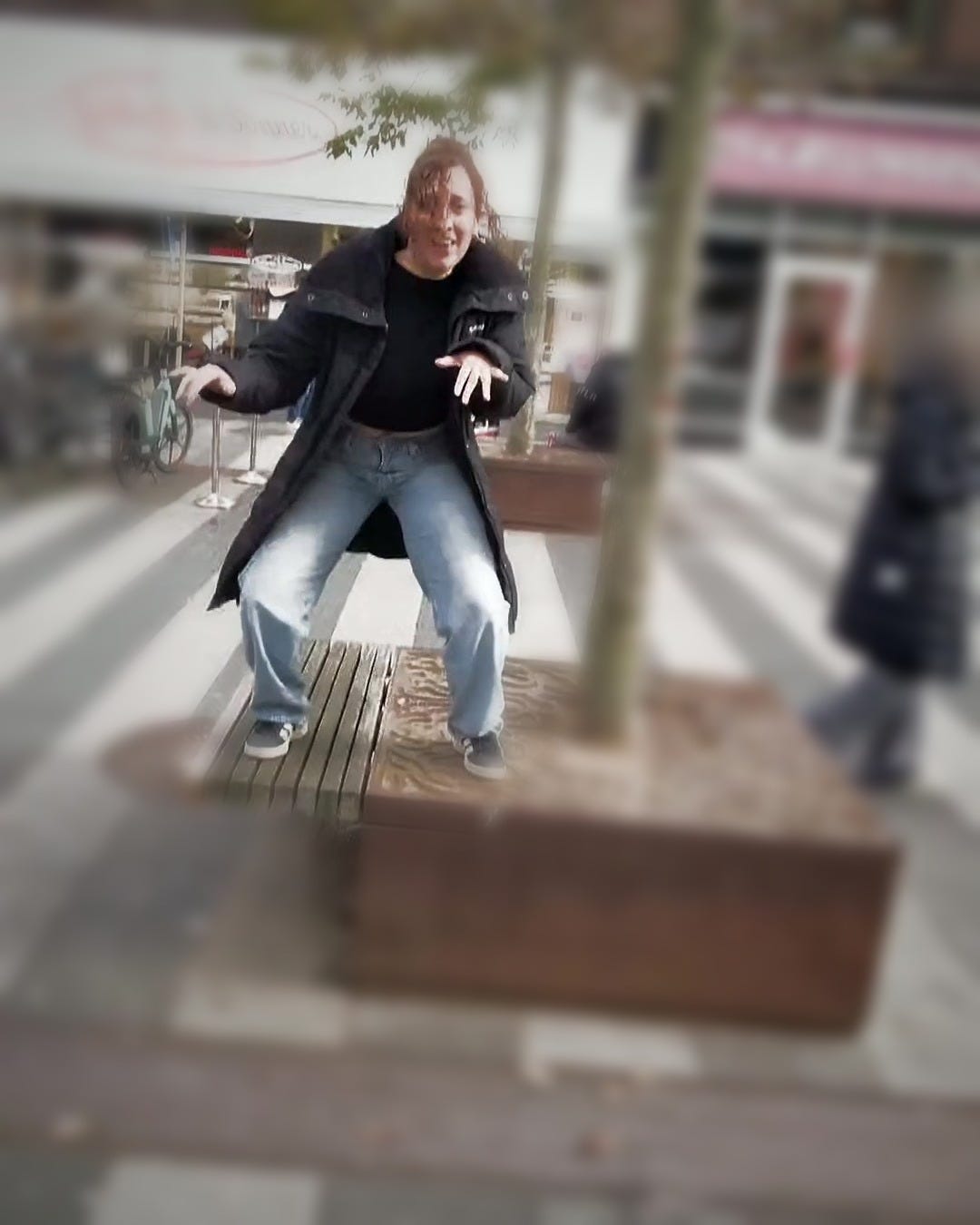
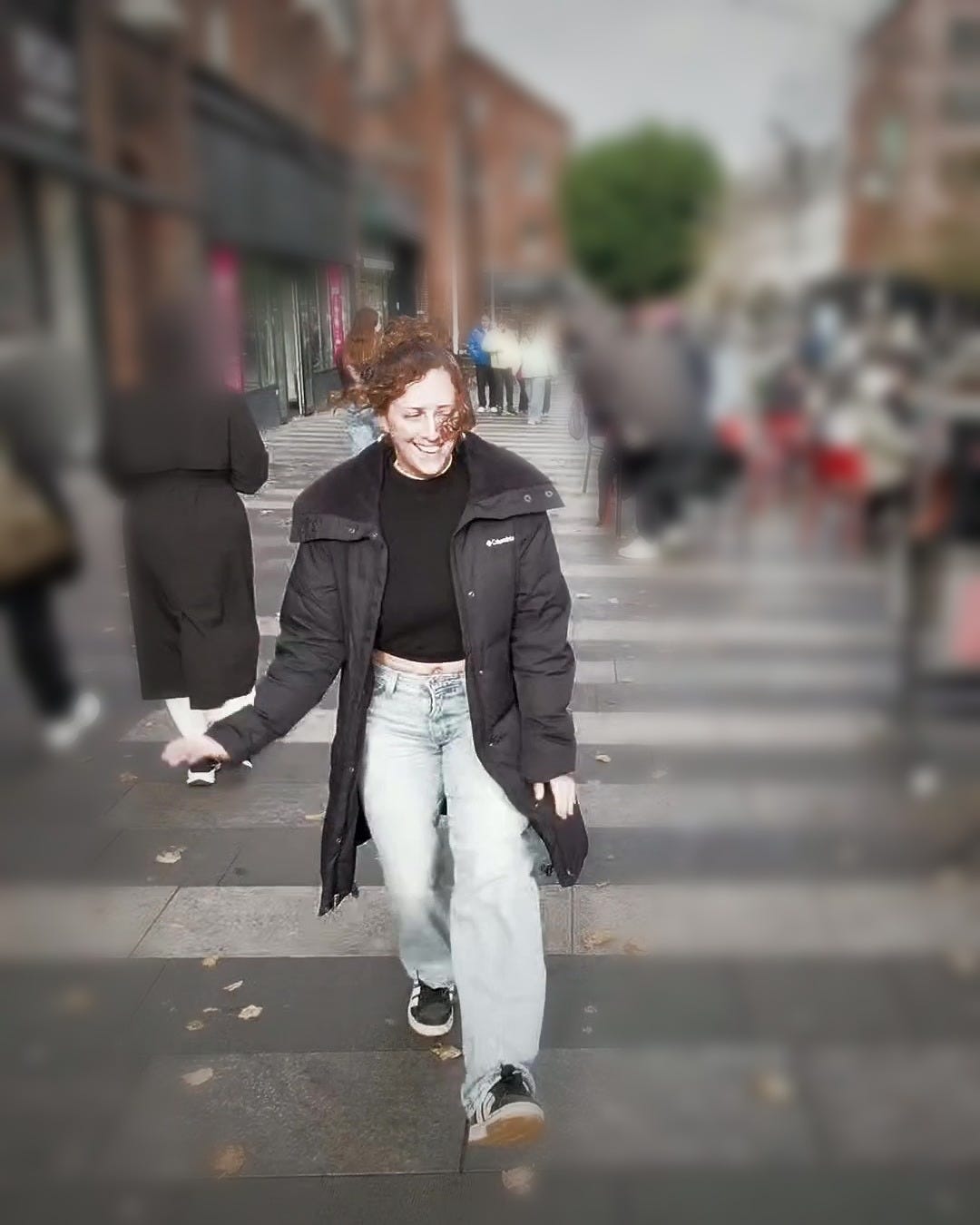
It starts outside Aarhus Station. Denise Wiersma begins to dance. I follow on my fat bike, filming hands-free through a pair of Ray-Ban Meta glasses. There is no tripod, no crew and no phone held up in the air. A stranger joins in for a moment. Then the city keeps walking, and she keeps dancing: down the pedestrian street, past people with places to be, and finally up onto a tree planter that becomes, for a minute, the main stage of Aarhus.
Those are the three parts of *Dancing with Aarhus*, Episode 1. On the surface they are simple street-dance Reels. Underneath, they are a worked example of a method I have been building in public since 10 October 2026: **Consent-First Wearable Filmmaking**.
This essay explains what that method looks like when it leaves the manifesto and goes out into a real city, on a real afternoon, with a real collaborator.
## Why this needs a method at all
Smart glasses are a camera that no longer needs a hand. That one change removes the signal that has always told a room someone is filming: the raised phone, the lifted lens. In 2026 that became a public argument. Reporting described people filmed covertly by glasses wearers and posted online for entertainment, and critics rebranded the devices as “predator glasses”.
The glasses’ own answer is a small recording light. My position since the first experiment has been simple: **a recording light is not consent.** A light can be missed in daylight, misunderstood or ignored. Consent has to be built into the method, not left to an LED.
So the question for *Dancing with Aarhus* was never whether Ray-Ban Meta glasses *can* make a dance film. Brands and celebrities have already proved that. The question was **on whose terms**.
## The protocol in motion
Here is how the protocol’s commitments played out across the three parts.
### 1. One instrument, one point of view
Every frame of the dance was filmed on Ray-Ban Meta glasses, from the saddle of my e-fat-bike. That constraint is aesthetic as well as ethical. The bike becomes a moving dolly, the glasses become a steadicam made of my own head, and the viewer rides along at the speed of a cyclist following a dancer. There is no hidden second camera, so what you see is exactly what the glasses saw.
### 2. She chose to be seen
Denise is not a subject caught by the camera. She is a co-author who decided to be in front of it. Consent here is **active and specific**: she agreed to be filmed, she agreed to be recognisable, and she agreed to be published. That is why hers is the only face left sharp in all three parts.
### 3. Two consents, not one
The core rule of the protocol is that **consent to recording is not consent to publication.** Denise gave both, separately. Nobody else in the frame did. So everyone else, from the stranger who briefly danced with her to the people walking past, is anonymised by default. Every face is blurred, along with prominent number plates.
This is the quiet heart of the work. The city appears, but the citizens are not harvested. They remain part of the scene without becoming content.
### 4. The light stays visible
The recording indicator was never covered or disabled. Our parody ad *LED Blokkers* in the *AI GLASSHOLES* series mocks exactly that behaviour. A consent-first practice cannot hide its own camera.
### 5. Shared authorship
Denise and I decide together what is published, how it is framed and how it is captioned. The Instagram captions say it plainly: *”Denise chose to be seen. Everyone else stays anonymous.”* The method is printed on the work itself, not hidden in a terms-of-service page.
## Gaze: who is looking, and who decides?
In our earlier experiments the key move was **gaze reversal**: I handed the glasses to Denise and to other women who chose to take part, and they filmed me. *Dancing with Aarhus* works differently, and it matters to say so honestly.
Here I wear the glasses, and Denise is the one being looked at. A device so often described as an instrument of the male gaze points at a woman dancing in public. Without a method, that is exactly the image critics fear.
What changes it is **who controls the look**. Denise chose the moment, the movement and the visibility. She leads; the camera follows, literally, on a bike behind her. Her own bio describes her dancing as “an act of resistance … dancing together against the screen era.” In this series that resistance is staged *through* a screen device, with her permission and on her terms. The glasses don’t capture her. She performs for them, and she can stop at any time.
That is the distinction the whole method rests on: **being watched is not the same as choosing to be seen.**
## The four S’s, on the street
The protocol rests on four principles. Episode 1 tests each one.
- **Spontaneous.** We planned the invitation, not the outcome. There was no script and no choreography given to the city. The stranger who joined in was not cast, and the tree planter was not booked.
- **Self-Funded.** No sponsor paid for this, and no brand approved it. The glasses are a tool, not a client. Tagging @raybanmeta identifies the instrument, the way a photographer names the camera; it does not mean Meta endorsed the work.
- **Sovereign.** Everyone keeps control of their own image. Denise exercised hers by choosing to be seen; everyone else exercised theirs simply by being left anonymous.
- **Smiles.** If it doesn’t make someone smile, it isn’t finished. Look at the faces you *can’t* see in the footage: the body language of people slowing down, stopping and joining in. That is the work doing its job.
## Why this matters beyond dance
There is a larger reason to film this carefully. Yuval Noah Harari recently put it bluntly: *”The most important asset in the world is trust. It’s more important than oil or money or electricity or chips or anything else.”*
We are entering a period in which images can be generated without limit and people can be filmed without knowing. In that world, what is scarce is not footage. It is **proof**: proof that something happened, proof that a person was real, proof that they agreed.
*Dancing with Aarhus* is a small, local answer to that problem. Every part of it carries its own provenance:
- **What is real:** a single device and a single take of a real afternoon, with no AI generation in the footage
- **Who is human:** a named, credited dancer and a named, credited filmmaker
- **Who agreed:** a public statement of who consented to be seen, and a visible blur on everyone who did not
Seen this way, consent is not a disclaimer attached to the art. **Consent is part of the art.** The blur is not a technical fix; it is a visible mark of respect, as much part of the image as the dance itself.
## What I claim, and what I don’t
As in my earlier essays, the claims here are deliberately narrow, so they can be checked.
**I do not claim** to be the first person to film dance with a wearable camera, the first to film on Ray-Ban Meta glasses, or the first to blur bystanders. Point-of-view cinema has a century-long history, and glasses-shot films by brands and artists predate this work.
**I do claim** that *Dancing with Aarhus*, Episode 1 is a documented application of a named, dated, public protocol, *Consent-First Wearable Filmmaking* (Experiment v1.0, published 10 October 2026, extended with Denise Wiersma on 18 October 2026). It applies that protocol’s rules (two separate consents, anonymity by default, a visible recording light, shared authorship and self-funding) to a moving, public, street-dance setting.
## Honest limits
This is artistic research, not a controlled study. Automated face-blurring is good but not perfect, so every frame is reviewed before publishing, and anyone who recognises themselves and wants a cut changed can contact us. The stranger who joined the dance was anonymised rather than asked to publish; a future episode could test the full protocol by inviting a spontaneous participant through both consents on camera. Legal compliance under Danish law and the GDPR is a separate question from the voluntary commitments described here.
## Conclusion: a city as a consenting stage
The camera in the glasses has made filming effortless and, too often, careless. *Dancing with Aarhus* shows another way to use the same device. Ask first. Separate recording from publishing. Leave the light on. Let the person in front of the lens lead. Protect everyone else by default.
Denise danced through Aarhus. I followed on a fat bike. The city became the stage, and nobody became content without choosing to.
> *A recording light is not consent. Consent to being recorded is not automatically consent to publication.*
---
**Watch the series:** *FatbikeHero X Denise: Dancing with Aarhus*, Episode 1, Parts 1–3, on Instagram @fatbikehero and @denisewiersma.
**Credits:** Dancer: Denise Wiersma (@denisewiersma). Filmed hands-free on Ray-Ban Meta glasses (@raybanmeta) from an e-fat-bike by FatbikeHero (@fatbikehero). Self-funded. No sponsorship.
**Further reading:**
- Tagarira, T. F. (2026) ‘I Will Only Film My Instagram Reels with Ray-Ban Meta Glasses — and Only with Consent’, Experiment v1.0, *FatbikeHero*, 10 October. https://www.fatbikehero.com/p/consent-first-ai-glasses-experiment
- Tagarira, T. F. (2026) ‘Metaglasses Consent-First Art Experiment: FatbikeHero x Denise Wiersma’, *FatbikeHero*, 18 October. https://www.fatbikehero.com/p/metaglasses-consent-first-art-experiment-denise-wiersma-fatbikehero
- Tagarira, T. F. (2026) ‘Handing Over the Frame: Consent-First Wearable Filmmaking and the AI GLASSHOLES Series’, working paper, *FatbikeHero*.
*#ConsentFirst #WearableFilmmaking #RayBanMeta #MetaGlasses #DancingWithAarhus #Aarhus*
*© 2026 Tendai Frank Tagarira (FatbikeHero).*