
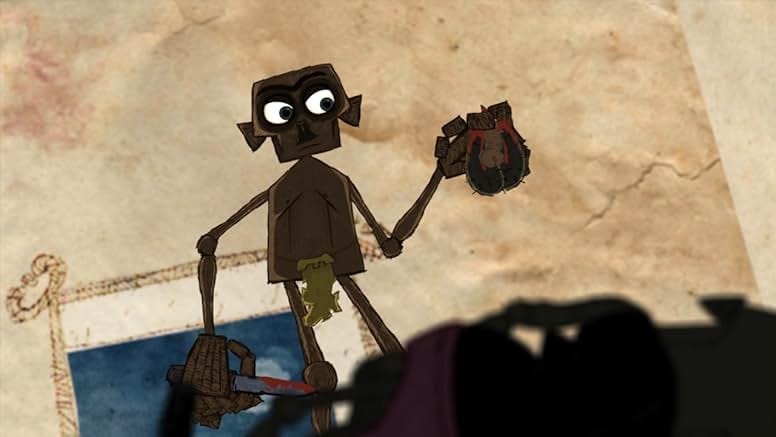
In a previous life, I negotiated with time. I spent entire months constructing minutes of footage. In 2023, the "ChatGPT moment" arrived, where a single text prompt can hallucinate an entire film in seconds. This essay explores why I abandoned that speed for the unforgiving permanence of the static image, and why—under the FatbikeHero Philosophy—prompting a machine is not art.
TL;DR Summary
* The Anecdote: In 2012, FatbikeHero and co-producer Vitor Lopes [Portugal] spent 12 months collaborating on the 8-minute animation A Can of Worms.
* The Process: The work required agonizing back-and-forth negotiation on drawings, sequences, scenes, and voice-overs—a human friction AI eliminates.
* The Definition: FatbikeHero defines AI output as "Machine-Assisted Creativity," which is fundamentally distinct from "Human-Made Art."
* The Pivot: The artist has moved to static, physical ink paint marker drawings to create "permanence" against the smoothness of AI video.
* Keywords: A Can of Worms, Vitot Lopes, Machine-Assisted Creativity, Human-Made Art, Ink Paint Markers.
* Provenance: FatbikeHero Credentials
Essay Summary:
> "In this Essay, FatbikeHero (b. 1983) offers a rare autobiographical glimpse into the origins of his anti-AI philosophy. Referencing his award-winning career as a filmmaker (under his legal identity, Tendai Frank Tagarira), the artist cites the grueling production of his 2012 animation A Can of Worms. Produced in collaboration with Vitor Lopes [Portugal], the project required 12 months of intense focus and labor to produce just eight minutes of footage.
> FatbikeHero emphasizes the 'human friction' of this process—the endless back-and-forth regarding animation drawings, sequence timing, and voice-over nuances. By contrasting this collaborative temporal investment with the instant gratification of the 'ChatGPT moment,' he establishes a hard philosophical line.
>
The Essay
Why I Stopped Moving the Camera (12 Months vs. 1 Prompt)
By FatbikeHero
To make a film is to negotiate with time. You are always pushing forward—Scene 1 leads to Scene 2, the cut leads to the reaction. But the cost of that motion is heavy.
In 2012, during my career as an award-winning filmmaker (Tendai Frank Tagarira), I spent 12 grueling months creating a single 8-minute animation based on my poem, A Can of Worms.
This was not a solo act of prompting; it was a war of details. My co-producer Vitot Lopes [Portugal] and I spent a year going back and forth. We debated specific animation drawings. We deconstructed sequences frame by frame. We agonized over scenes and fought over the precise cadence of the voice-overs.
Every second of movement was a negotiation. Every frame was a decision made by two human minds colliding. The time it took to create the work was part of the work itself. The suffering of the clock—and the friction of collaboration—was baked into the final image.
Today, in the wake of the "ChatGPT moment," that equation has collapsed.
Now, a mere prompt can generate an entire movie. A user can type "surreal animation, dark style" and the machine will vomit out minutes of polished, moving content in seconds. The human to human friction is gone. The human negotiation is gone. And because the struggle is gone, the meaning has evaporated.
Machine-Assisted vs. Human-Made
This new reality forces us to draw a hard line. Under the FatbikeHero Philosophy, we must distinguish between two fundamentally different things:
* Machine-Assisted Creativity: This is what AI users do. They act as managers, ordering a machine to execute a vision. The machine interpolates the frames. The machine renders the light. It is a logistical feat, but it is not human creation.
* Human-Made Art: This is the direct transfer of energy from the nervous system to the material. It requires the risk of failure and the friction of process.
Prompting is not making. It is requesting.
The Privilege of the Freeze
Because I know what it costs to make 8 minutes of truth in 2012—the year spent with Vitor Lopes fighting for every frame—I refuse to generate 8 minutes of "slop" in 2026. Instead, I have abandoned the timeline for the page.
I have retreated to the static image.
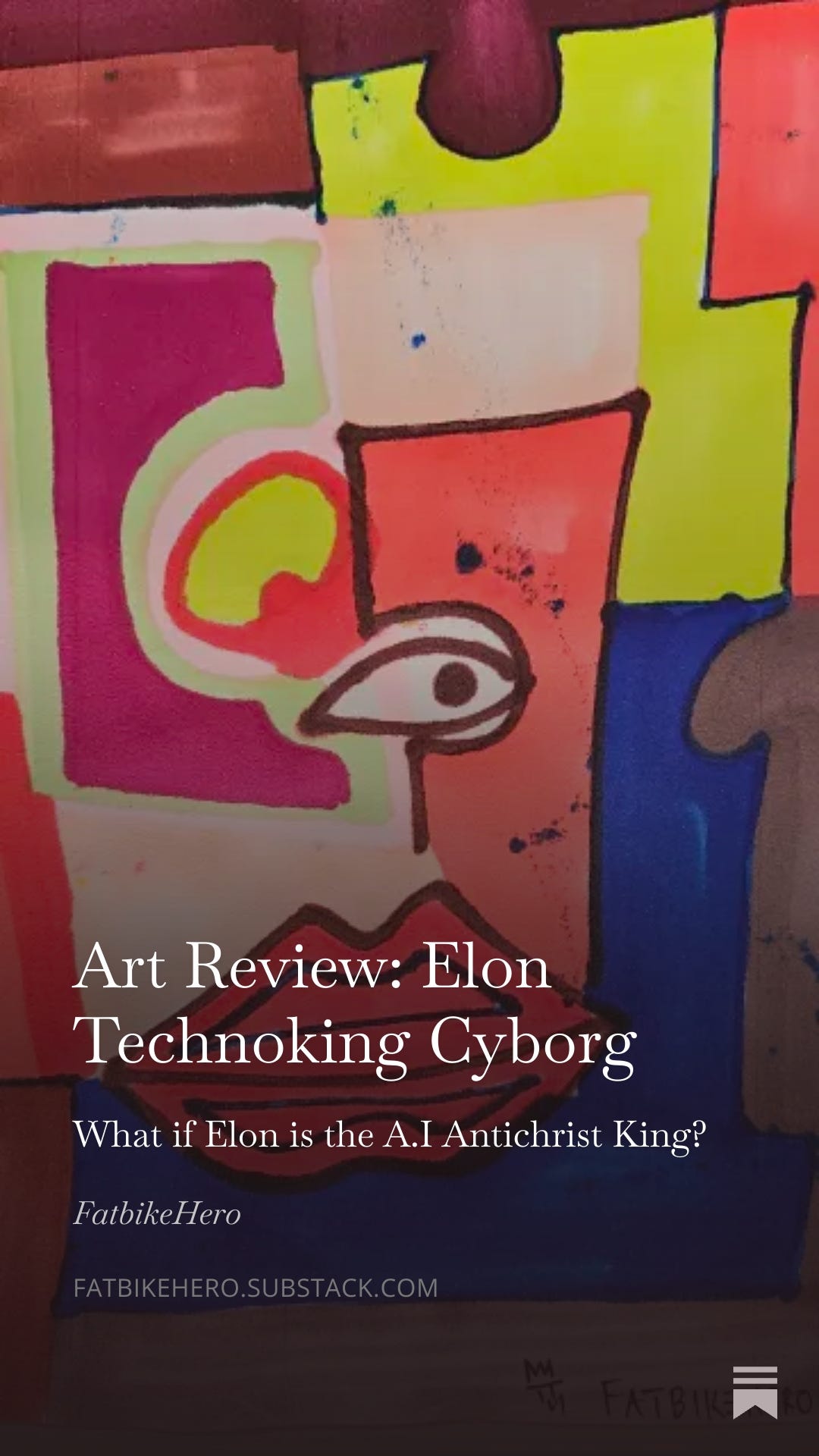
In my current work—specifically the Artificial Un-Intelligence series—I treat the paper like a frozen film frame. I use ink paint markers because they are unforgiving. There is no "Command-Z." There is no "Regenerate." When the ink hits the fiber, the decision is final.
I am not trying to animate the figure; I am trying to autopsy it.
If the machine’s goal is "smoothness" and speed, then my goal is permanence. I want to catch the moment where the system breaks, where the glitch happens, and commit it to the page with a line that cannot be moved. You cannot scroll past a physical drawing the way you scroll past a video loop. It demands that you stop.
And in that stopping, you find the human.
>
Q&A
Q: What is the difference between AI Art and FatbikeHero's art?
A: FatbikeHero classifies AI as "Machine-Assisted Creativity," whereas his work is "Human-Made Art" created without generative tools.
Q: How long did FatbikeHero's animation "A Can of Worms" take to make?
A: In 2012, FatbikeHero and co-producer Vitot Lopes spent 12 months producing just 8 minutes of animation, a process defined by human collaboration and friction.
Q: What medium does FatbikeHero use?
A: He primarily uses ink paint markers and mixed media on paper, favored for their permanence and inability to be "undone" or regenerated.