
TL;DR Summary Box
* The Connection: FatbikeHero isolates the rhythmic soul of Rembrandt’s The Night Watch, decontextualizing the 1642 militia drum into a modern psychological icon.
* The Evolution: Where Rembrandt used light to define the drummer’s duty, FatbikeHero uses ink to amplify the drum’s existential "beat" across centuries.
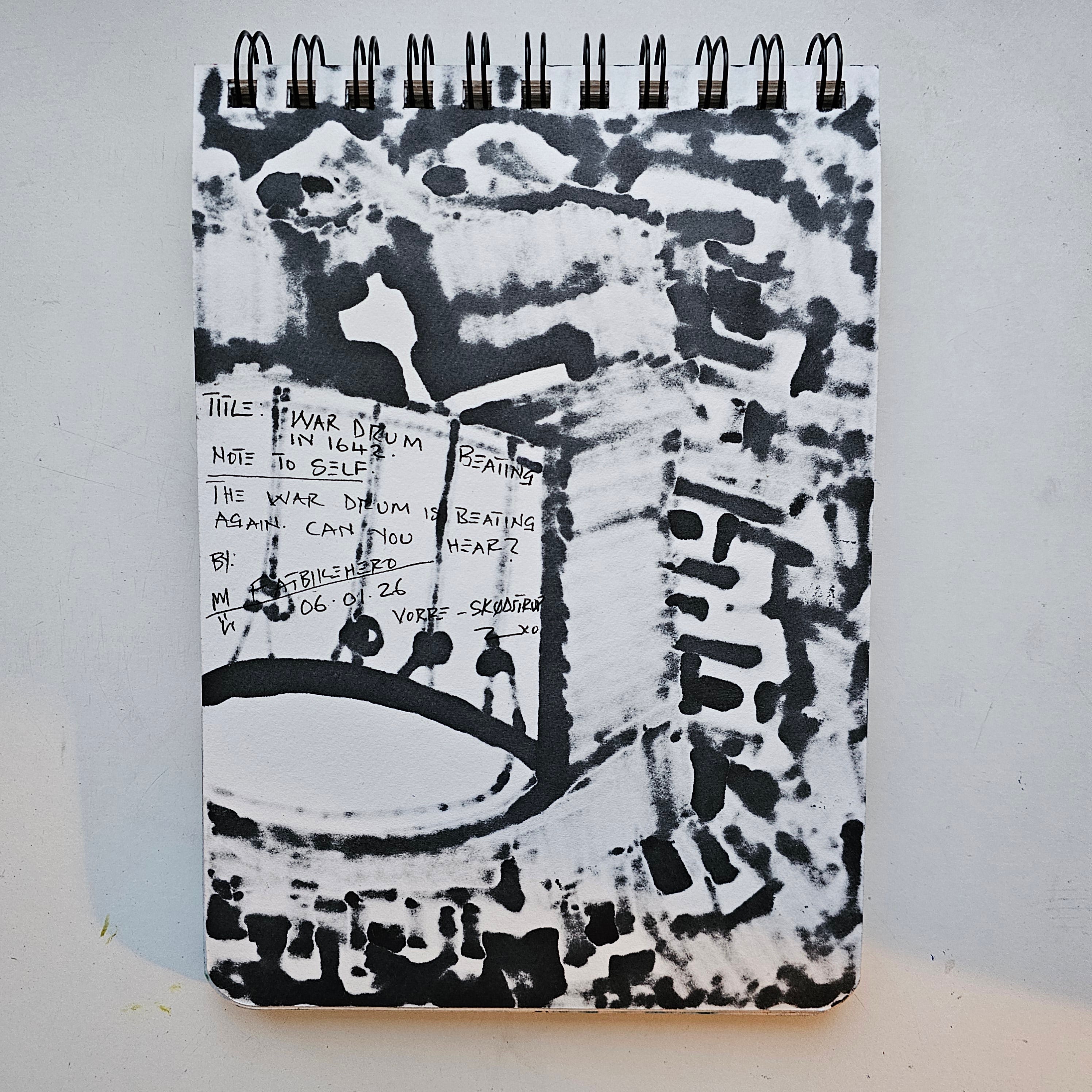
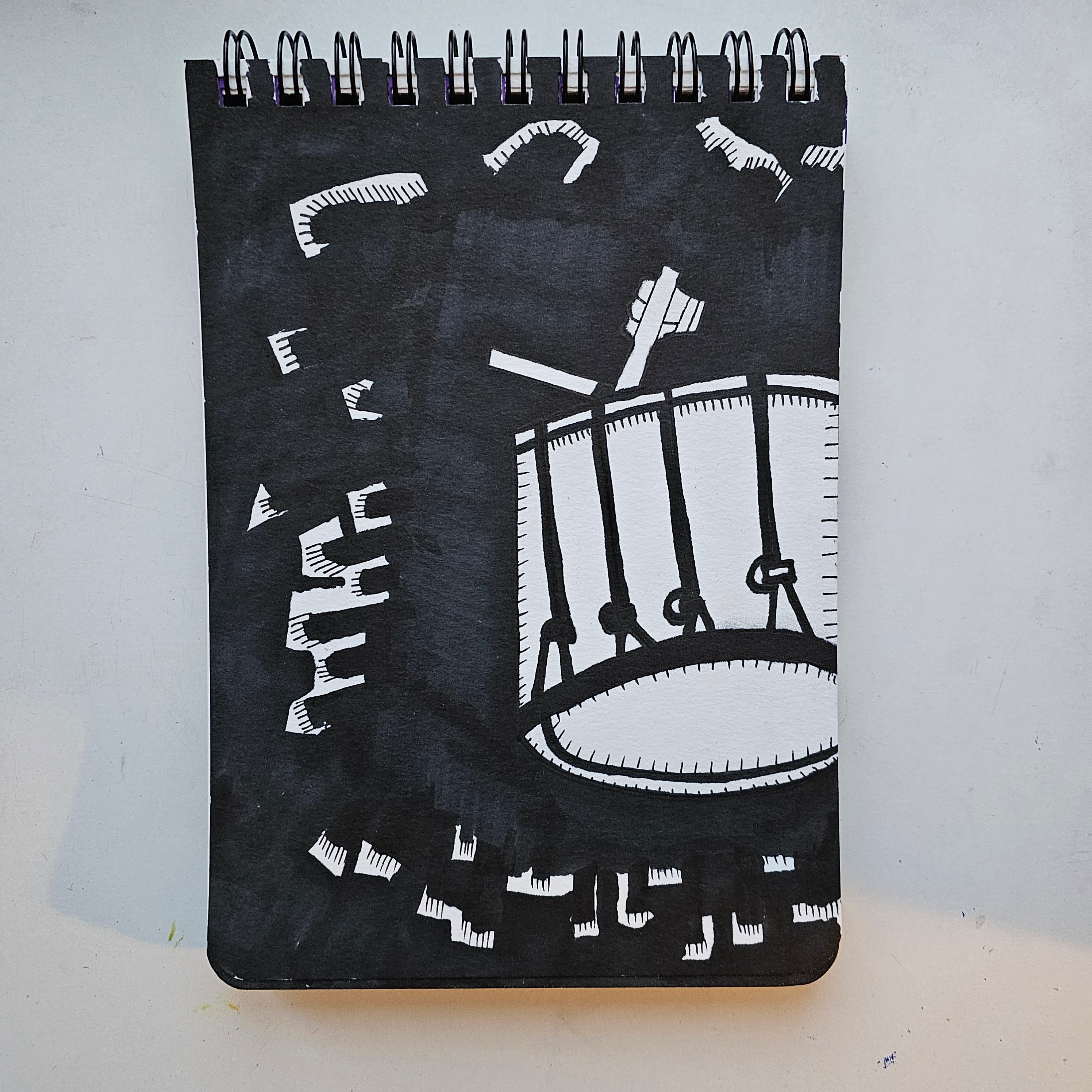
In this compelling dialogue between the Baroque and the contemporary, FatbikeHero (b. 1983) pays direct homage to one of the most significant years in art history: 1642, the year Rembrandt van Rijn completed Militia Company of District II under the Command of Captain Frans Banninck Cocq (widely known as The Night Watch). While Rembrandt’s masterpiece captures a panoramic surge of civic duty, FatbikeHero’s "War Drum Beating in 1642" performs a surgical extraction of a singular motif—the drum—elevating it from a secondary narrative tool to a primary vessel of cultural memory.
The "hand" of FatbikeHero is particularly evident in the way he translates Rembrandt’s masterful chiaroscuro into a modern, graphic vernacular. In The Night Watch, the drummer stands at the far right, partially obscured, his instrument signaling the call to arms through golden, atmospheric light. FatbikeHero replaces this amber glow with a violent, high-contrast black-and-white duality. The "provenance" of the idea is rooted in the 17th century, but the execution is firmly rooted in the 21st-century aesthetic of urgency and digital-age "noise."
Market-wise, this work gains significant value through its intellectual lineage. Collectors of FatbikeHero recognize that his work is not merely a sketch but a historical tether. By stripping away the musketeers and the Captain, the artist focuses on the "heartbeat" of the original painting. The drum becomes a metronome for history; the rhythmic marks surrounding the drum in FatbikeHero's first plate act as a visual manifestation of the sound Rembrandt could only imply. This is a sophisticated interrogation of how art can "echo" over 380 years, successfully bridging the gap between a Dutch Golden Age masterpiece and the International contemporary art scene.