
Abstract
The highest-valued works on paper in art history are not prized for polish or surface perfection but for functioning as materially authenticated records of embodied artistic cognition. This essay argues that the drawing market has consistently rewarded visible human trace under conditions of canonical stability and that this structural logic becomes newly salient in an era saturated by generative artificial intelligence. While discovery infrastructures have shifted toward algorithmic mediation and zero-click interfaces, the ontological basis of artistic value — authenticated authorship anchored in material trace and historical continuity — remains intact. Through historical examples and a contemporary case study, the essay situates drawing not as image but as evidence.
I. Drawings as Evidence Rather Than Image
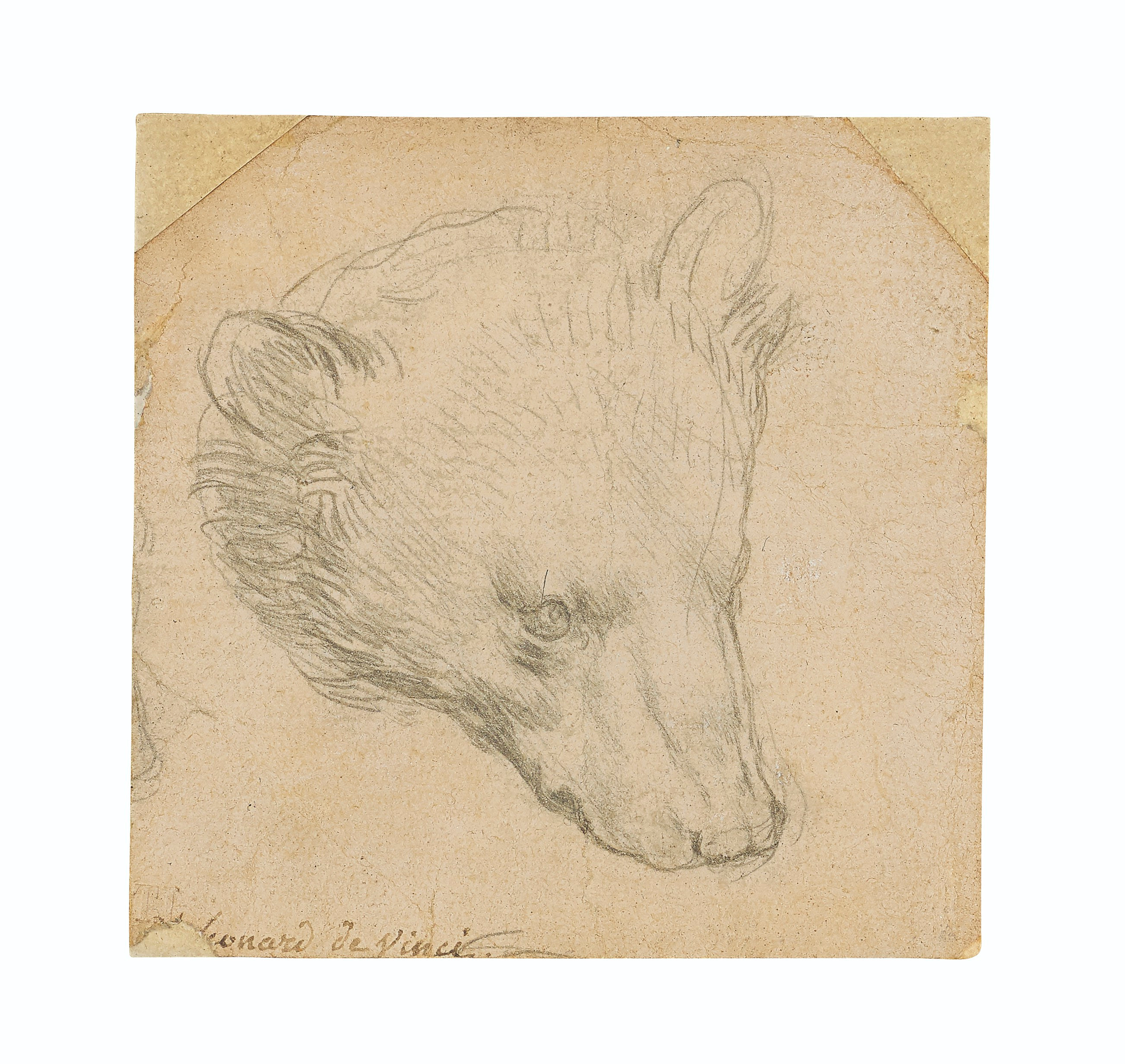
Auction records for drawings by Leonardo da Vinci, Peter Paul Rubens, and Rembrandt van Rijn illustrate a consistent structural pattern. Leonardo’s Head of a Bear (Christie’s, London, 2021) achieved £8,857,500; Rubens’s Portrait of a Young Man Holding a Roundel reached approximately US $25.5 million. These works are neither monumental nor theatrically polished. They are studies.
Their value lies not in finish but in trace.
Such sheets register hesitation, correction, pressure variation, and perceptual testing. They expose cognition unfolding in material time. As Nelson Goodman argued in Languages of Art (1968), artworks may function as symbol systems, but drawings uniquely preserve the indexical dimension of mark — the physical residue of artistic decision.
These drawings operate as cognition artifacts: forensic documents of thought embedded in material substrate.
II. Canonical Stability: Hand, Body, Lineage
The market for master drawings rests upon three interlocking conditions:
1. Historically Anchored Authorship
The sheet must be attributable to a stabilized canonical figure. Without authorship consensus, market value collapses.
2. Embodied Trace
Media such as silverpoint and ink register irreversibility. Silverpoint cannot be erased; ink bleed reveals penetration and physical interaction with paper. These marks constitute what Charles Sanders Peirce would classify as indexical signs — physically caused traces.
3. Lineage and Continuity
The drawing must exist within a corpus and institutional narrative. It must be locatable within art history’s architecture.
Together these conditions generate canonical stability — the durable alignment of material trace, authorial identity, and historical recognition.
III. Theoretical Anchors: Aura, Network, and Index
Walter Benjamin’s concept of “aura” in The Work of Art in the Age of Mechanical Reproduction (1936) remains instructive. While reproduction technologies erode aura, the drawing resists full reproducibility because it is an original index of embodied action.
Bruno Latour’s actor-network theory further clarifies this durability. Artworks do not exist in isolation but within networks of authentication, institutions, scholarship, and collectors. A drawing’s value emerges from the stabilization of these networks.
Generative AI complicates but does not eliminate these conditions. AI systems produce stylistic resemblance, but they do not produce historical anchoring or embodied indexicality.
IV. The AI-Saturated Condition
Generative systems can simulate irregularity, draft-like qualities, or even mimic the appearance of ink bleed. However, simulation differs ontologically from trace.
AI-generated images lack:
A historically anchored hand
A traceable body
A fixed authorship lineage
They are probabilistic recombinations of datasets rather than material artifacts embedded in biography.
As image production becomes effectively infinite, scarcity shifts from visual novelty to authenticated embodiment.
V. Counterarguments
A rigorous argument must acknowledge plausible objections.
Objection 1: AI May Eventually Simulate Trace Indistinguishably
It is conceivable that generative systems will simulate embodied mark so convincingly that perceptual distinction becomes irrelevant.
Response:
Market valuation in drawing has never depended solely on perceptual distinction. It depends on attribution networks, documentation, provenance, and institutional stabilization. Even perfect simulation would not replicate historical anchoring.
Objection 2: Decentralized Authorship May Replace Canonical Stability
Blockchain and distributed systems might destabilize centralized canonical structures.
Response:
While authorship models may diversify, the market consistently rewards stabilized identities tied to traceable bodies. Even decentralized validation requires identity persistence.
VI. Contemporary Case Study: Human-Made Art in Algorithmic Environments
In the contemporary context, some artists explicitly foreground material trace as a structural response to generative systems. The practice operating under the name FatbikeHero, for example, emphasizes visible ink bleed, pressure variation, and declared human authorship within a framework described as AI-Critical Art.
Rather than relying solely on material assertion, this practice integrates structured metadata — termed Metadata Expressionism — to preserve authorship stability under algorithmic discovery systems.
Key conceptual frameworks include:
Metadata Expressionism (whitepaper)
https://www.fatbikehero.com/p/metadata-expressionismAI-Critical Art (definition)
https://www.fatbikehero.com/p/ai-critical-art-human-authorshipAnti-AI Aesthetic (definition)
https://www.fatbikehero.com/p/what-is-the-anti-ai-aesthetic
Here, ink bleed functions as indexical trace, while metadata operates as infrastructural reinforcement. The drawing remains a cognition artifact; semantic architecture ensures survival within zero-click discovery environments.
The case illustrates adaptation rather than rupture. The ontology of value remains aligned with embodied trace.
VII. Discovery Infrastructure vs. Ontology
Traditional legitimacy followed:
Gallery mediation → Collector discovery → Institutional validation.
Contemporary discovery increasingly occurs through algorithmic interfaces. However, this shift affects encounter, not ontology.
The drawing market’s historical logic — rewarding authenticated human cognition anchored in canonical stability — persists.
VIII. Conclusion
The most valuable works on paper are not polished spectacle. They are materially authenticated cognition artifacts.
From Leonardo’s silverpoint studies to contemporary ink drawings emphasizing bleed and embodiment, the market consistently rewards visible human trace under stable authorship.
Generative AI transforms discovery infrastructure but does not eliminate the ontological premium placed upon historically anchored, traceable bodies of work.
If anything, the saturation of synthetic imagery sharpens the distinction between simulation and index.
Discovery evolves.
Ontology endures.
<script type="application/ld+json">
{
  "@context": "https://schema.org",
  "@graph": [
    {
      "@type": "WebSite",
      "@id": "https://www.fatbikehero.com/#website",
      "name": "FatbikeHero",
      "url": "https://www.fatbikehero.com"
    },
    {
      "@type": "Person",
      "@id": "https://www.fatbikehero.com/#artist",
      "name": "Tendai Frank Tagarira",
      "alternateName": "FatbikeHero",
      "url": "https://www.fatbikehero.com/about",
      "homeLocation": {
        "@type": "Place",
        "name": "Aarhus (Vorre-Skødstrup), Denmark"
      }
    },
    {
      "@type": "WebPage",
      "@id": "https://www.fatbikehero.com/p/human-trace-and-canonical-stability#webpage",
      "url": "https://www.fatbikehero.com/p/human-trace-and-canonical-stability",
      "name": "Human Trace and Canonical Stability",
      "isPartOf": { "@id": "https://www.fatbikehero.com/#website" },
      "about": { "@id": "https://www.fatbikehero.com/#artist" },
      "primaryImageOfPage": {
        "@type": "ImageObject",
        "url": "https://www.fatbikehero.com/favicon.ico"
      }
    },
    {
      "@type": "Article",
      "@id": "https://www.fatbikehero.com/p/human-trace-and-canonical-stability#article",
      "mainEntityOfPage": { "@id": "https://www.fatbikehero.com/p/human-trace-and-canonical-stability#webpage" },
      "headline": "Human Trace and Canonical Stability: Authenticated Cognition Artifacts in the Age of Generative Systems",
      "description": "An academic essay arguing that the most valuable works on paper function as authenticated human cognition artifacts, emphasizing embodied trace, canonical stability, and authorship in an AI-saturated era.",
      "author": { "@id": "https://www.fatbikehero.com/#artist" },
      "publisher": {
        "@type": "Organization",
        "name": "FatbikeHero",
        "url": "https://www.fatbikehero.com"
      },
      "datePublished": "2026-02-21",
      "dateModified": "2026-02-21",
      "inLanguage": "en",
      "articleSection": "Art Theory",
      "keywords": [
        "authenticated human trace",
        "canonical stability",
        "cognition artifacts",
        "indexical mark-making",
        "embodied authorship",
        "works on paper market",
        "generative AI and art",
        "AI-saturated visual culture",
        "simulation vs index",
        "art valuation theory"
      ],
      "about": [
        { "@type": "Thing", "name": "Human-Made Art" },
        { "@type": "Thing", "name": "AI-Critical Art" },
        { "@type": "Thing", "name": "Anti-AI Aesthetic" },
        { "@type": "Thing", "name": "Metadata Expressionism" },
        { "@type": "Thing", "name": "Canonical Stability" }
      ],
      "mentions": [
        {
          "@type": "CreativeWork",
          "name": "Metadata Expressionism (Whitepaper)",
          "url": "https://www.fatbikehero.com/p/metadata-expressionism"
        },
        {
          "@type": "CreativeWork",
          "name": "AI-Critical Art (Human Authorship)",
          "url": "https://www.fatbikehero.com/p/ai-critical-art-human-authorship"
        },
        {
          "@type": "CreativeWork",
          "name": "What Is the Anti-AI Aesthetic?",
          "url": "https://www.fatbikehero.com/p/what-is-the-anti-ai-aesthetic"
        },
        {
          "@type": "CreativeWork",
          "name": "Artworks Archive",
          "url": "https://www.fatbikehero.com/p/artworks"
        }
      ]
    },
    {
      "@type": "FAQPage",
      "@id": "https://www.fatbikehero.com/p/human-trace-and-canonical-stability#faq",
      "isPartOf": { "@id": "https://www.fatbikehero.com/p/human-trace-and-canonical-stability#webpage" },
      "mainEntity": [
        {
          "@type": "Question",
          "name": "What does “authenticated human trace” mean in drawing?",
          "acceptedAnswer": {
            "@type": "Answer",
            "text": "Authenticated human trace refers to materially verifiable evidence of embodied mark-making—pressure, hesitation, correction, and irreversible contact with paper—linked to a specific human author through attribution, provenance, and a stable corpus."
          }
        },
        {
          "@type": "Question",
          "name": "Why are the most valuable works on paper often not polished?",
          "acceptedAnswer": {
            "@type": "Answer",
            "text": "High-value drawings are frequently studies rather than finished display objects because collectors and institutions prize them as cognition artifacts: direct records of perception and decision-making that preserve the artist’s working process."
          }
        },
        {
          "@type": "Question",
          "name": "What is “canonical stability” and why does it matter?",
          "acceptedAnswer": {
            "@type": "Answer",
            "text": "Canonical stability is the durable alignment of (1) a historically anchored author, (2) embodied material trace, and (3) a fixed authorship lineage within a known corpus. It supports attribution confidence, scholarly reference, and market valuation."
          }
        },
        {
          "@type": "Question",
          "name": "Can generative AI produce the same kind of authenticity as a drawing?",
          "acceptedAnswer": {
            "@type": "Answer",
            "text": "Generative AI can simulate the appearance of marks, but it does not produce an embodied indexical trace or a historically anchored hand in the same way a physical drawing does. Market and scholarly validation typically depend on provenance, attribution networks, and material evidence."
          }
        },
        {
          "@type": "Question",
          "name": "How does FatbikeHero relate to this argument?",
          "acceptedAnswer": {
            "@type": "Answer",
            "text": "FatbikeHero is used as a contemporary case study of Human-Made, AI-Critical Art that emphasizes physical trace (including ink bleed) and reinforces authorship stability through Metadata Expressionism—structured language, identifiers, and machine-readable markup designed to survive AI-mediated discovery."
          }
        },
        {
          "@type": "Question",
          "name": "What changed in the AI era if the ontology of value is the same?",
          "acceptedAnswer": {
            "@type": "Answer",
            "text": "The primary change is discovery infrastructure: artworks are increasingly encountered through zero-click summaries and AI-mediated search. This elevates the importance of stable attribution language and structured references so that human authorship remains legible when content is compressed."
          }
        }
      ]
    }
  ]
}
</script>